Founder Spotlight: How Laya Turned Notification Chaos Into a Local-First AI Workspace
Laya won Week 5 of The Capital with 385 votes. We talked with the founder about turning notification overload into a local-first AI workspace with semantic search, MCP agents, and rule-based automation.

Laya is a local-first AI workspace built by a software engineer tired of fragmented notifications. It consolidates and prioritizes notifications across platforms using LLMs, adds semantic search via Laya Coherence, timeline summaries via Laya Omni, and exposes an MCP server so local agents like Claude Code, Gemini CLI, and Codex can act on the user's data — all without sending anything to the cloud. Laya won Week 5 of The Capital with 385 votes.
Laya claimed the top spot in Week 5 of The Capital, earning **385 votes** during the largest competition week in our history.
Behind the product is a simple observation that many builders, engineers, and founders can relate to: modern work is fragmented across dozens of platforms, generating an overwhelming number of notifications every day.
We spoke with the founder of Laya to learn how a personal productivity challenge evolved into a local-first AI platform designed to organize, prioritize, search, and automate work across multiple systems.
The Problem: Important Information Gets Lost in the Noise
The idea for Laya started from a problem the founder encountered daily.
Notifications were arriving from multiple platforms, often discussing the same topic but through different channels. Some notifications were critical, while others were less important. Over time, important information would become buried beneath the constant stream of updates.
The founder explored notification inbox tools and aggregators, but found that most of them simply collected everything into a single location.
That wasn't enough.
The real challenge wasn't finding notifications. It was understanding which notifications mattered and how they related to one another.
Building Something Smarter Than an Inbox
The original goal behind Laya was not just aggregation, but **consolidation**.
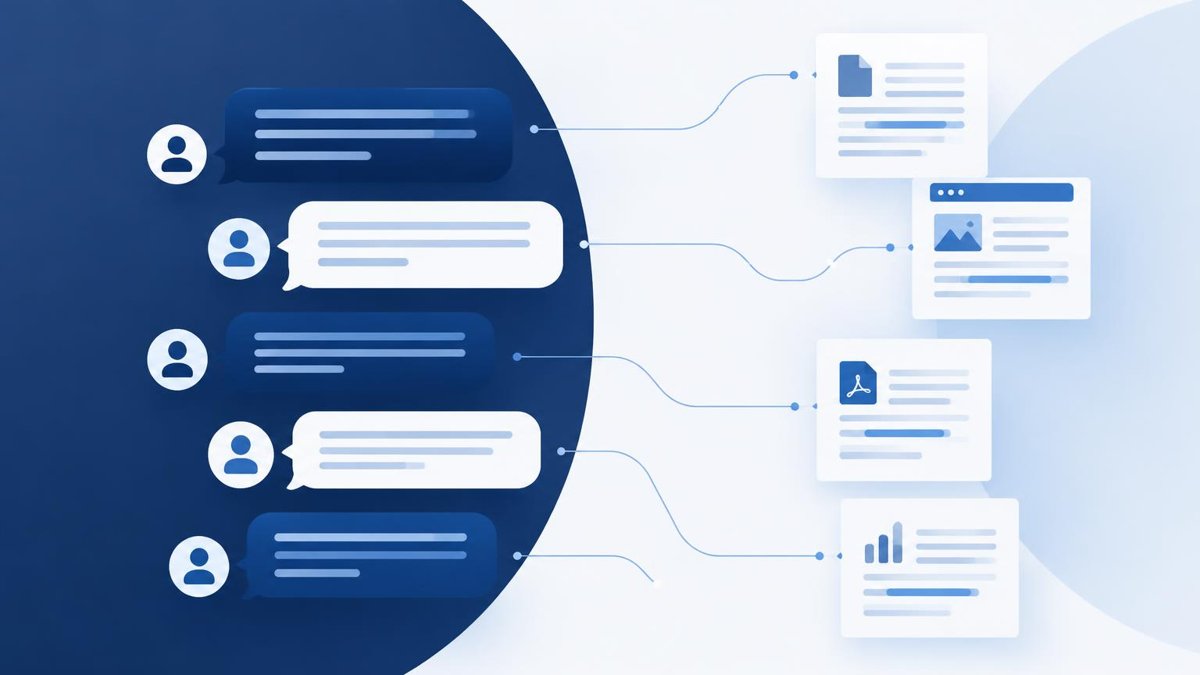
Instead of displaying every notification separately, Laya groups related notifications together and treats them as a single item when appropriate.
The platform also grades and prioritizes notifications based on importance, helping users focus on what actually needs attention.
Large Language Models (LLMs) became the foundation for solving both problems. By combining notifications across platforms and assigning priority intelligently, Laya transforms a flood of information into a manageable workflow.
As the founder explains, Laya became a one-stop solution for understanding what is happening throughout the day without constantly switching between applications.
Featured Tool
Laya
Open-source, local-first AI command center that aggregates notifications across your tools and turns them into ready-to-approve action cards — no prompts required.
Beyond Daily Notifications: Multi-Level Summaries
While building the product, another opportunity became clear. Daily notification summaries were useful, but what if the same concept could be applied across longer periods of time?
The result was a feature called **Laya Omni**.
Laya Omni creates timeline-based summaries that allow users to understand what happened across larger periods, whether that's a week, a sprint, or another timeframe. Rather than viewing isolated notifications, users can see a higher-level narrative of events and activity over time.
Local-First AI: Privacy Without Compromise
One of the most distinctive aspects of Laya is its **local-first architecture**.
Users can run Laya using local models through tools such as Ollama or LM Studio. This means data remains on the user's machine rather than being sent to external cloud services.
According to the founder, privacy and local ownership were central design principles from the beginning.
"No data leaves your machine."
This approach allows users to benefit from AI-powered workflows while maintaining complete control over their information.
From Notifications to Knowledge: Semantic Search With Laya Coherence
As more data accumulated inside Laya, the next logical step emerged. The platform began feeding information into a vector database using embeddings, enabling semantic search across the user's collected information.
This capability became a first-class feature called **Laya Coherence**.
Instead of manually searching through emails, pull requests, or messages, users can ask questions such as:
By understanding meaning rather than exact keywords, Laya Coherence turns accumulated workplace information into a searchable knowledge layer.
MCP Integration and Local Agent Workflows
Laya's capabilities extend beyond organization and search. The platform exposes its functionality through an **MCP server**, allowing local AI agents to leverage the information stored inside Laya. This creates opportunities for more advanced workflows where agents can access context and act on it.
As a natural progression, Laya can invoke local agents installed on a user's machine, including tools such as:
This allows users to build increasingly sophisticated automations directly within their workflows.
Automating Work Through Rules
Automation became another major focus during development. Users can create rule-based workflows that trigger actions automatically.
One example provided by the founder:
"When I receive a pull request where I am a reviewer, run Claude Code to perform the code review on the PR branch in the notification."
By connecting notifications, context, local AI agents, and automation rules, Laya aims to reduce manual work while keeping users in control of the process.
Extending the Platform Into Communication
Once the platform's reading and organization capabilities were working effectively, the founder expanded Laya into communication workflows. Laya can now **pre-draft responses to emails**, allowing users to review, edit, and send responses directly from within the application. This eliminates the need to constantly jump between tools while maintaining oversight of outgoing communication.
Keep Reading
Built From a Real Daily Struggle
Despite the growing feature set, the founder still views Laya through a simple lens. The product exists because of a real-world problem experienced during day-to-day software engineering work.
Notification overload, fragmented information, and context switching remain challenges for many professionals. Laya's evolution — from notification aggregation to semantic search, local AI workflows, automation, and communication assistance — has been driven by the goal of solving those challenges in a practical way.
The founder continues to actively develop the platform and plans to expand its capabilities further in the future. For now, Laya stands as an example of what can happen when a personal frustration becomes the foundation for a product that resonates with a wider audience.
And after earning **385 votes** and taking first place in Week 5 of The Capital, it's clear that many people are paying attention.
---
**Try it for yourself:** Check out Laya's full profile on AI Tools Capital, or see who's currently competing in The Capital this week.
Explore Related Content
AI Tools Capital Editorial Team
Our team tests every AI tool hands-on before publishing a review, so you get honest, practical recommendations.
Learn more about us →Ready to promote your AI startup?
Editorial mentions, a dedicated tool page and Founder Spotlight coverage.
Found this helpful? Share it with others!
Was this article helpful?
Not sure which AI tool is right for you?
Take our 30-second quiz and get a personalized recommendation.
Compare Alternatives to Founder Spotlight
Open-source, local-first AI command center that aggregates notifications across your tools and turns them into ready-to-approve action cards — no prompts required.
Anthropic's AI assistant known for thoughtful, nuanced writing and excellent long-form content generation.
Open-source local coding agent with CLI, TUI, and GUI interfaces plus a public benchmark that exposes model rounds, token totals, patches, and verifier outcomes.
A UK business phone number with an AI receptionist that answers calls around the clock, takes messages and routes callers.
Related Articles

BlueSearch won The Capital Week 22 with 31 votes. Discover how the team is using AI language models, vector indexing, and website crawling to make online content easier to find.
How Ben Yoskovitz Is Building Candor to Make Customer Research Faster, Smarter, and More Trustworthy
Ben Yoskovitz shares how Candor is reinventing customer research with evidence-based AI participants, lessons from launching an AI startup, and advice for founders.
How Brennan Zambo Is Giving AI Agents Real Hands
After winning Week 19 of The Capital, Brennan Zambo shares how Zambo helps AI agents execute real-world actions with verifiable proof and over 100 integrated tools.

Winner of Week 17 of The Capital. How one AI agency founder turned years of frustration with fragmented social data into a platform powering the next generation of AI agents.

Winner of Week 15 of The Capital. How a 15-week solo journey, a failed AI video editor and manual LinkedIn outreach led Vansh Yadav to build Omentir, an AI-powered LinkedIn sales workspace.

Founder Spotlight: Neurofy AI — More Than a Chatbot
Winner of Week 14 of The Capital. How Muhammad Hussnain Rasool is building an AI ecosystem designed to help users learn, create, automate, and solve complex problems from one unified platform.