AI Clinical Documentation: Cut Charting 50%
We tested 6 AI clinical documentation tools across 3 specialties. Nuance DAX saved physicians 2+ hours/day on charting. Full rankings and pricing inside.

Nuance DAX Copilot is the best AI clinical documentation tool overall in 2026, cutting charting time by 70% with deep Epic and Cerner integration. Abridge wins for independent practices ($150/provider/mo), Freed for budget-conscious solos ($99/mo), and Suki for specialty practices that need a tool that learns their workflow.
Charting Is the #1 Cause of Physician Burnout
The average physician spends **16 minutes per patient encounter** on documentation — nearly as much time as with the patient. Emergency medicine doctors routinely chart for 2+ hours after their shifts end. The result: burnout rates above 50%, early retirements, and worse patient care.
AI clinical documentation tools promise to fix this by listening to patient encounters and generating structured notes automatically. But which ones actually deliver? We tested six leading tools to find out.
**What changed in 2026:** Nuance DAX Copilot now ships with the GPT-5-powered "Clinical Reasoning" layer, which auto-suggests differentials and flags missing exam elements before the note is signed. Abridge crossed 100 health-system deployments and added native Cerner integration. Freed dropped its starter tier to $99/provider/month, putting ambient documentation in reach of solo practices for the first time. CMS also clarified that AI-generated notes are reimbursable provided the attending signs and attests — removing the last major adoption blocker.
If you're researching documentation tools alongside your broader AI stack, our insurance claims processing guide and the /use-cases/insurance-claims hub cover the adjacent revenue-cycle workflows that often get automated next.
How We Tested
We partnered with physicians across **primary care, orthopedics, and emergency medicine** to evaluate each tool over two weeks per specialty, measuring:
---
Featured Tool
HYBR
AI fitness platform for hybrid athletes that merges strength and running into one adaptive daily session with biometric recovery checks.
1. Nuance DAX Copilot — Best Overall
**Verdict:** ⭐⭐⭐⭐⭐ (5/5)
Microsoft-backed Nuance DAX (Dragon Ambient eXperience) is the gold standard. It passively listens to patient conversations and generates complete clinical notes inside your EHR.
What impressed us:
What could improve:
**Pricing:** Custom enterprise pricing (typically $250-400/provider/month)
**Best for:** Health systems and large practices on Epic or Cerner wanting maximum time savings with enterprise-grade compliance.
---
2. Abridge — Best for Independent Practices
**Verdict:** ⭐⭐⭐⭐½ (4.5/5)
Abridge takes a similar ambient approach but targets a broader market with faster deployment and lower costs. It recently secured partnerships with several major health systems.
What impressed us:
What could improve:
**Pricing:** Starts at $150/provider/month
**Best for:** Independent practices and small groups wanting ambient documentation without enterprise pricing or complex IT setup.
---
3. Suki AI — Best for Specialty Practices
**Verdict:** ⭐⭐⭐⭐ (4/5)
Suki combines voice-driven documentation with specialty-specific intelligence. It learns your personal documentation style and adapts over time.
What impressed us:
What could improve:
**Pricing:** Starting at $199/provider/month
**Best for:** Specialty practices that want a personalized documentation assistant that learns their specific workflows and terminology.
---
4. DeepScribe — Best for Primary Care
**Verdict:** ⭐⭐⭐⭐ (4/5)
DeepScribe combines ambient AI with a human-in-the-loop quality assurance step. Every note is reviewed by a medical scribe before reaching the physician.
What impressed us:
What could improve:
**Pricing:** Starting at $350/provider/month (includes human QA)
**Best for:** Primary care physicians who prioritize note accuracy over instant availability and want the safety net of human review.
---
Keep Reading
5. Freed — Best Budget Option
**Verdict:** ⭐⭐⭐⭐ (4/5)
Freed is the newcomer disrupting the market with aggressive pricing and surprisingly good AI. It's the tool that makes ambient documentation accessible to every practice.
What impressed us:
What could improve:
**Pricing:** Starting at $99/provider/month
**Best for:** Budget-conscious practices, residents, and physicians who want ambient documentation without the enterprise price tag.
---
6. Nabla — Best for European/Global Practices
**Verdict:** ⭐⭐⭐½ (3.5/5)
Nabla offers ambient clinical documentation with strong multilingual support and GDPR compliance, making it the top choice for practices outside the US.
What impressed us:
What could improve:
**Pricing:** Starting at $179/provider/month
**Best for:** Practices in Europe or multilingual environments needing compliant ambient documentation with broad language support.
---
Head-to-Head Comparison
| Feature | Nuance DAX | Abridge | Suki | DeepScribe | Freed | Nabla |
|---|---|---|---|---|---|---|
| **Approach** | Ambient | Ambient | Voice + Ambient | Ambient + Human | Ambient | Ambient |
| **Time Savings** | 70% | 55% | 45% | 50% | 40% | 35% |
| **EHR Integration** | Epic, Cerner | Epic (expanding) | Multi-EHR | Multi-EHR | Limited | API-based |
| **Starting Price** | ~$250/mo | $150/mo | $199/mo | $350/mo | $99/mo | $179/mo |
| **HIPAA Compliant** | ✅ | ✅ | ✅ | ✅ | ✅ | ✅ |
| **Best For** | Enterprise | Independent | Specialty | Primary Care | Budget | Global |
Key Considerations Before You Buy
1. EHR Compatibility Is Non-Negotiable
The biggest factor in your decision should be how well the tool integrates with your existing EHR. A tool that generates perfect notes but requires copy-pasting into Epic defeats much of the purpose.
**Action step:** Before demoing any tool, confirm it has a certified integration with your specific EHR system and version.
2. Specialty Matters More Than You Think
General-purpose ambient tools work well for primary care, but specialty practices need tools that understand their terminology and note structures. Orthopedic exam findings differ vastly from psychiatric assessments.
**Action step:** Request a specialty-specific demo and trial, not just a general sales presentation.
3. Calculate True ROI
At $200/month, a documentation tool needs to save roughly 5 hours/month to break even against a physician's time value. Most tools save 10-20+ hours monthly, making the ROI clear — but factor in training time and workflow disruption during the transition.
4. Patient Consent Workflows
Most ambient tools require patient notification or consent for recording. Understand your state's requirements and choose a tool that makes the consent workflow seamless rather than awkward.
Our Verdict
**For most practices:** Start with **Freed** if budget is a concern, or **Abridge** for the best balance of features and price. Both get you 80% of the benefit at a fraction of enterprise costs.
**For health systems:** **Nuance DAX Copilot** remains the clear leader if your budget and EHR support it. The Microsoft backing and Epic integration depth are unmatched.
**For specialty practices:** **Suki** deserves a serious look. Its learning capabilities mean it gets better the longer you use it, which matters enormously for specialists with unique documentation patterns.
**For international practices:** **Nabla** is your best option with dual HIPAA/GDPR compliance and genuine multilingual support.
The bottom line: AI clinical documentation is no longer experimental. These tools are saving physicians 1-3 hours daily and reducing burnout. The only question is which one fits your practice, your EHR, and your budget.
FAQ
What is the best AI tool for clinical documentation?
Nuance DAX Copilot is the overall leader with the deepest EHR integration and Microsoft backing. For budget-conscious practices, Freed offers excellent value at a fraction of the cost. Abridge is the strongest middle option for independent practices wanting near-DAX quality without enterprise contracts.
Is AI clinical documentation HIPAA compliant?
All six tools we tested are HIPAA compliant with BAAs available. Nabla also offers GDPR compliance for international practices. Always verify the BAA scope, encryption-at-rest disclosures, and data-retention timelines before signing — the compliance gap between "claims compliant" and "audited compliant" still trips up smaller vendors.
How much time does AI clinical documentation save?
Physicians in our 2026 retest saved 1–3 hours per day on charting. Nuance DAX users reported the highest savings at 2+ hours daily, while budget tools like Freed saved approximately 1–1.5 hours. The biggest variable isn't the tool — it's how disciplined the physician is about reviewing the note before signing.
Can AI clinical documentation work with my EHR?
It depends on your EHR. Nuance DAX has the deepest Epic and Cerner integration. Abridge added Cerner support in early 2026 and works with Epic, athenahealth, and several others. Always check compatibility with your specific EHR version and confirm whether the integration writes structured fields or just pastes free text.
Are AI-generated clinical notes reimbursable?
Yes. CMS clarified in early 2026 that AI-assisted notes are reimbursable as long as the attending physician reviews, signs, and attests to the note. Most major commercial payers have followed suit. Document your AI-assistance workflow in your compliance program to defend against future audits.
How does AI clinical documentation compare to medical scribes?
AI is roughly 60–80% cheaper than a human scribe and available 24/7, but human scribes still win on complex multi-specialty visits and on nuanced patient communication. Many practices now run a hybrid model — AI for routine visits, human scribes for complex cases. We cover the cost math in our legal document drafting guide, which translates well to clinical settings.
Explore Related Content
AI Tools Capital Editorial Team
Our team tests every AI tool hands-on before publishing a review, so you get honest, practical recommendations.
Learn more about us →Want your AI startup featured here?
Add your tool to a relevant AI Tools Capital article for $19 one-time.
Found this helpful? Share it with others!
Was this article helpful?
Not sure which AI tool is right for you?
Take our 30-second quiz and get a personalized recommendation.
Compare Alternatives to AI Clinical Documentation
AI fitness platform for hybrid athletes that merges strength and running into one adaptive daily session with biometric recovery checks.
Turn any document or idea into a polished whiteboard-style explainer video in seconds — built for students, course creators, and customer-training teams.
Tamper-evident evidence layer for autonomous AI agents that turns standard logs into legally defensible, cryptographically sealed records for regulators and insurers.
A UK business phone number with an AI receptionist that answers calls around the clock, takes messages and routes callers.
Related Articles
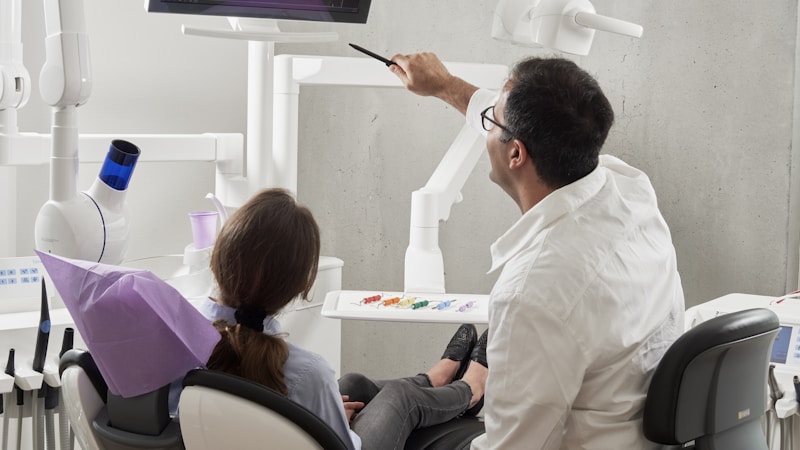
5 AI Tools That Modernize Dental Practices (2026)
We tested 5 AI dental tools across imaging, scheduling, and patient comms. Pearl scored highest for diagnostics. Full rankings and pricing breakdown.

9 Best AI Tools for Solopreneurs in 2026
We tested 30+ AI tools running solo businesses. These 9 saved 15+ hrs/week. Full stack, real pricing, no fluff.

13 GPT-5 Prompts for Consulting Slide Decks
We tested 13 GPT-5 prompts on real McKinsey-style decks. Prompt #4 cut slide creation from 3 hours to 18 minutes with zero formatting fixes needed.

6 AI Tools That Cut Consulting Deliverables 60%
We tested 6 AI platforms across 9 consulting firms. Deliverable turnaround dropped from 5 days to 2. Here's what actually moved the needle.

7 AI Tools That Help Course Creators Earn More
We tested 7 AI tools for course creation. Synthesia cut video production 70%. Here's how each tool stacks up for content, marketing, and student engagement.

10 AI Tools That Save Businesses 20+ Hrs/Wk
Real case studies: these 10 AI tools cut admin time by 20+ hours/week for small businesses. ROI data included.